🌃 Nightlife & Urban Rhythms: Karachi Streets After Dark
Introduction: The City That Glows
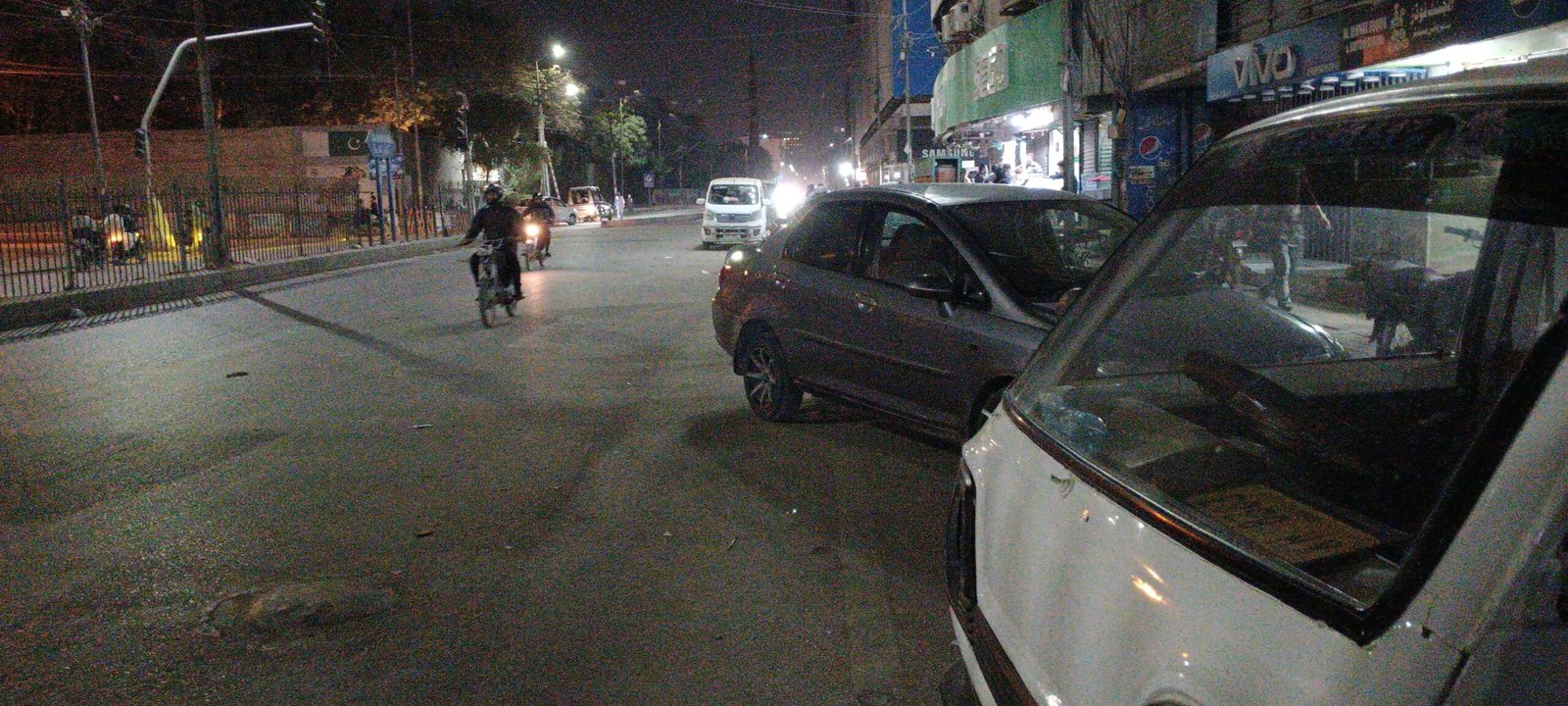
Karachi is a city that refuses to sleep. When the sun sets, its streets transform into illuminated corridors of commerce, traffic, and human activity. Neon signs flicker to life, motorcycles weave through cars, and food stalls begin their nightly ritual of feeding the masses. This nighttime photo captures the essence of urban rhythms after dark — glowing storefronts, moving vehicles, and people navigating the city’s pulse.
Urban nightlife is more than a backdrop; it is a living narrative of resilience, adaptation, and identity. Karachi’s streets after dark embody persistence, glowing with energy and culture.
Architecture in the Night
Buildings with lit signs (VIVO, Pepsi, Samsung) stand as beacons of modern consumer culture. Their glow against the dark sky highlights how architecture adapts to nighttime identity. The fenced area with trees and a flag adds civic presence, balancing commerce with community.
The multi‑story structures tell a layered story: shops on the ground floor, offices or homes above. Balconies enclosed with grills, air conditioners jutting out, and faded paint reflect both practicality and endurance. Architecture here is not about grandeur — it is about survival and coexistence.
Reader Prompt: How does your city’s architecture change after sunset?
Traffic and Movement
Cars, motorcycles, and even a cyclist share the road. The white van in the foreground and parked vehicles show both motion and pause. Night traffic in Karachi is a cultural mirror — flexible, adaptive, and resilient. It reflects how the city continues to move even when most of the world slows down.
Unlike the orderly lanes of London or Tokyo, Karachi’s traffic thrives on negotiation. Drivers rely on instinct, pedestrians cross wherever space allows, and motorcycles weave through gaps. It is chaotic yet functional — a system built on trust and adaptation.
💡 Quick Insight: Karachi’s roads remain among the busiest in South Asia, even after dark.
Commerce After Sunset
Storefronts glowing with global brands show how commerce thrives at night. Shops remain open, catering to late‑night customers. The illuminated signs are not just advertisements; they are cultural markers of a city that embraces modernity while sustaining local traditions.
But commerce is changing. According to new government regulations, all commercial shops must now close by 9 pm, except food outlets. This law reshapes the rhythm of Karachi’s nightlife. Travel agencies, clothing stores, and electronics shops shut their doors earlier, leaving food stalls and restaurants as the dominant players after dark.
This shift has cultural and economic implications:
- Families now plan shopping earlier in the evening.
- Workers who relied on late‑night shops must adjust routines.
- Food culture becomes even more central, as eateries remain the only legal option past 9 pm.
Human Element
The cyclist and motorcyclist embody persistence. Even at night, people continue their routines — commuting, working, or simply moving through the city. This resilience is the heartbeat of Karachi’s nightlife.
Night workers — drivers, vendors, security guards — form the invisible backbone of the city. Their presence ensures continuity, proving that urban life is not about silence but about adaptation.
Engagement Hook: Who are the unsung heroes of your city’s nightlife?
Food and Night Culture
Karachi’s nightlife is incomplete without food. As the day winds down, chai dhabas light up, kebab stalls sizzle, and biryani vendors serve steaming plates to hungry crowds. These food spots aren’t just about eating — they’re social spaces where friends gather, workers unwind, and families share late dinners.
Street food at night also reflects resilience. Vendors adapt to traffic, weather, and electricity shortages, yet they remain a constant presence. For many, these stalls are affordable dining options, making them vital to the city’s economy.
Compare this to Dubai’s polished night markets or Mumbai’s bustling chowpatty — Karachi’s food culture is raw, authentic, and deeply human.
Try This: Next time you grab chai at midnight, notice how the stall becomes more than a shop — it’s a community in motion.
Nighttime Economy and the 9 pm Law
The new law mandating shop closures by 9 pm has reshaped Karachi’s nighttime economy. While food outlets thrive, other businesses face challenges.
- Travel agencies lose late‑night customers booking urgent trips.
- Retail shops must adjust staffing and supply chains.
- Street vendors selling non‑food items face stricter enforcement.
Yet, food stalls and restaurants benefit. With fewer alternatives, they become the focal point of nightlife. Families flock to eateries, students gather at tea stalls, and workers rely on affordable meals.
This regulation also reflects broader urban planning goals: reducing energy consumption, easing traffic, and improving public safety. Whether it succeeds depends on how residents adapt.
Symbolism of Lights
Neon signs and illuminated storefronts are more than advertisements — they are cultural symbols. A glowing Pepsi sign represents global consumer culture, while a chai stall’s dim bulb reflects local resilience. Together, they create a mosaic of modernity and tradition.
Light itself becomes identity. In Karachi, illumination is not just functional; it is aspirational. It signals progress, commerce, and continuity.
Voices of the Street
Every street has stories. Imagine:
- A chai vendor brewing tea for students discussing exams.
- A motorcyclist delivering food to families.
- A shopkeeper closing at 9 pm, reflecting on how the new law affects his income.
These voices humanize the city. They remind us that urban rhythms are not abstract — they are lived experiences.
Comparisons with Other Cities
Karachi’s nightlife can be compared with:
- Lahore: Known for food streets, but less chaotic traffic.
- Mumbai: Similar resilience, with trains running late into the night.
- Dubai: Polished, regulated, and commercialized, unlike Karachi’s raw authenticity.
Such comparisons highlight Karachi’s uniqueness: a city that thrives on improvisation.
Conclusion: The Pulse of Nightlife
This nighttime photo isn’t just an image — it’s a narrative of resilience, commerce, and culture. Karachi’s streets after dark embody persistence, glowing with energy and identity.
The new 9 pm law reshapes rhythms, but it cannot silence the city. Food stalls, chai dhabas, and resilient workers ensure continuity. Urban life here is not about silence; it’s about adaptation. The city breathes through its lights, traffic, and people, proving that its rhythm never stops.
Join the Conversation: How has the 9 pm law changed your experience of Karachi’s nightlife?
“From daylight hustle to nighttime glow, Karachi’s streets tell stories around the clock.”

Founder of What Buy & Author of “Diplomacy on the Edge.” Durrani writes about education, creativity, and digital entrepreneurship. His mission: helping students learn smarter and earn better.
Follow me on:
Facebook |